
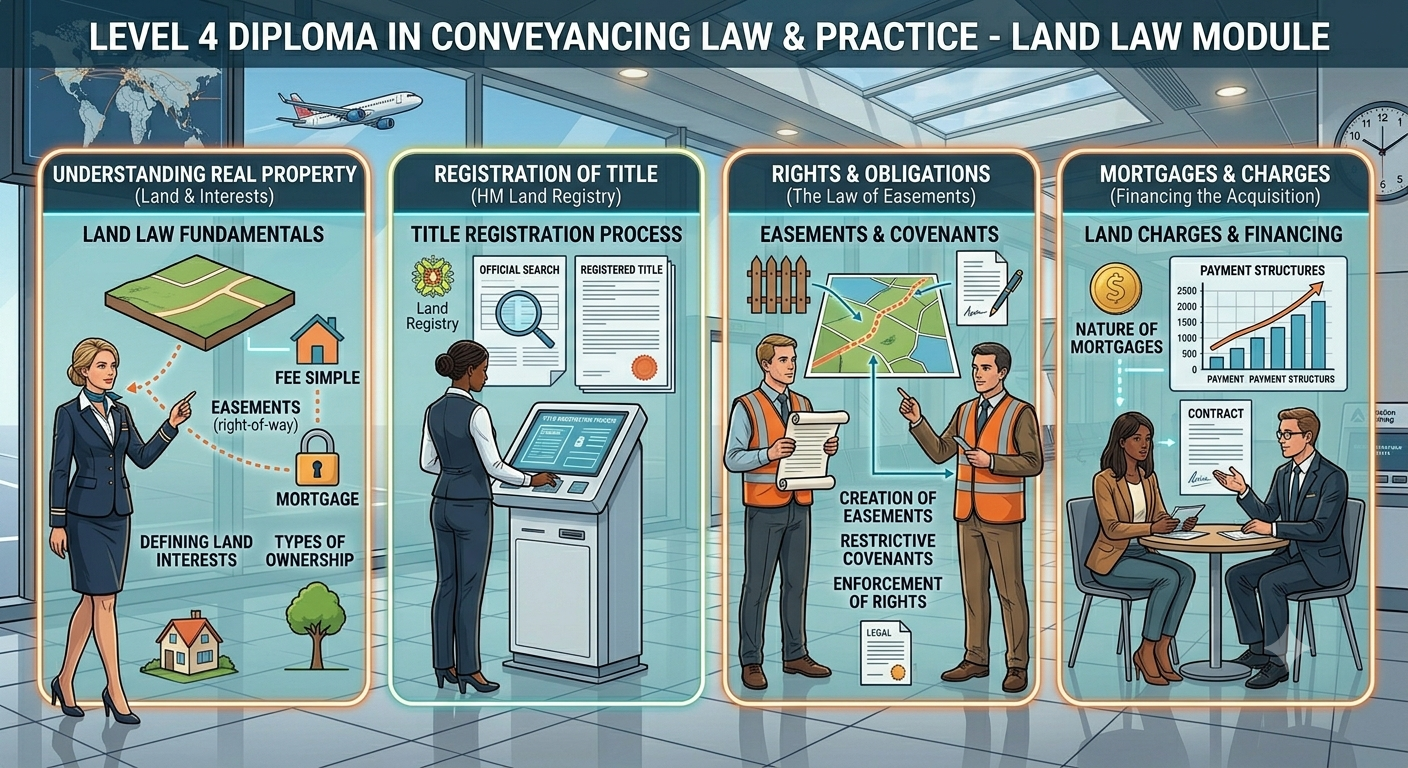
Level 4 Diploma in Conveyancing Law & Practice

- 1 Section
- 8 Lessons
Welcome to the Level 4 Diploma in Conveyancing Law & Practice module on Land Law.
Land Law forms the bedrock of conveyancing practice in England and Wales. Every piece of property paperwork, every title search, and every advice letter you draft for a client relies directly on the principles established by centuries of common law, equity, and statute.
As a future Conveyancing Technician or Licensed Conveyancer, your role is not just to transfer administrative records, but to investigate, verify, and secure legal rights. If you do not understand what land actually encompasses, how various people can simultaneously hold rights over the same plot, or how the Land Registry operates, you cannot safely advise a buyer or a lender.
This module bridges the gap between abstract legal theory and daily transactional reality. It strips away archaic legalese to focus on the practical application of property laws—ensuring you can confidently spot title defects, protect your client's interests, and guide a transaction safely from instruction to completion.
Learning Outcomes
By the end of this comprehensive module, you will be able to:
- Analyse and Apply Core Concepts: Distinguish between physical land, fixtures, and fittings, and accurately identify the legal estates and interests that can exist in land.
- Differentiate Systems of Title: Compare and navigate the dual tracks of the Registered and Unregistered land systems, understanding how rights are protected in each.
- Evaluate Forms of Ownership: Explain the operational differences between Freehold and Leasehold estates and advise clients on the critical implications of Co-ownership (Joint Tenancy vs. Tenancy in Common).
- Assess Third-Party Rights: Identify, create, and determine the enforceability of easements, covenants, mortgages, and licences during a standard conveyancing transaction.
- Investigate Title Defect Risks: Systematically review Title Registers, Title Plans, and Epitomes of Title to identify risks, overriding interests, or adverse possession claims.
- Solve Practice-Based Problems: Apply statutory provisions (such as TOLATA 1996, LRA 2002, and LPA 1925) to real-world conveyancing scenarios and advise clients on appropriate remedial actions.
Want to submit a review? Login